Influencing behaviour
Predictive Interventions
Improve your travellers’ habits to reduce your travel programme’s cost and emissions
When corporate travel data is analysed at traveller level, a consistent pattern appears:
- Around 30% of travellers account for roughly 70% of travel emissions
- The top 5% of travellers alone can drive around a third of total emissions
This doesn’t happen because those travellers are careless or non-compliant. It happens because small repeated decisions add up.
Why traditional travel programmes struggle to change this
Most programmes are managed through:
- Broad policies
- Programme-level targets
- Post-trip reporting
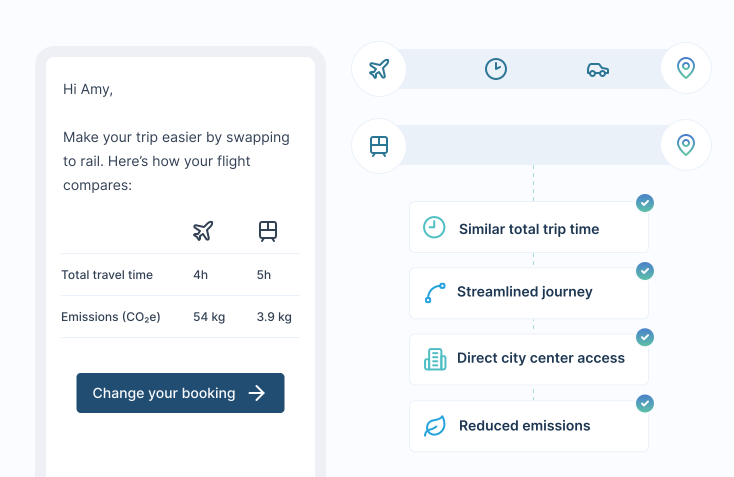
These tools are useful for governance but for frequent travellers the issue isn’t a lack of information. What’s missing is timely, relevant guidance that fits how they travel.
Emissions and cost
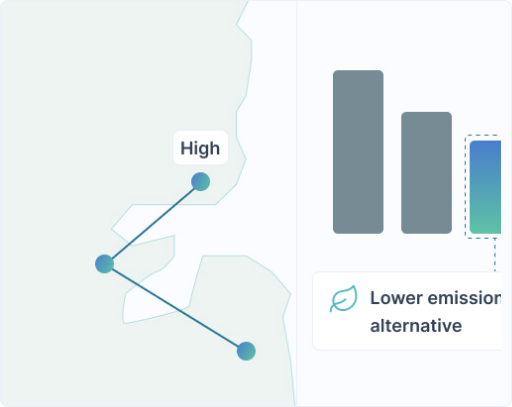
Cost and emission are driven by the same behaviours
The travellers responsible for the highest emissions, are often the same ones generating a large share of travel spend and facing:
- Exposure to price volatility
- Pressure on budgets and approvals
By focusing on repeat behaviour and high-frequency travel, interventions address cost and emissions together, through the same decision points.

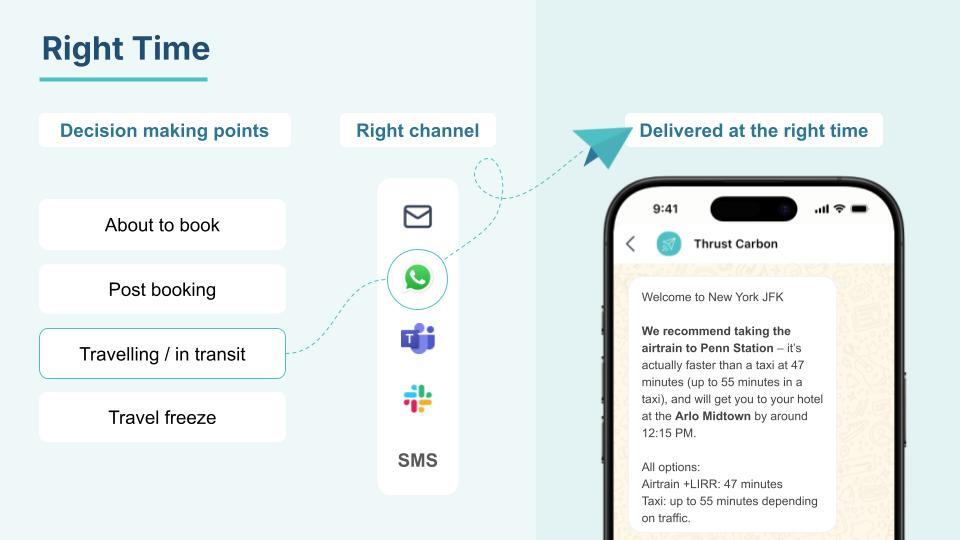
This allows us to surface the right guidance to the right traveller, at the right moment – whether that decision is made by the traveller themselves or by someone booking on their behalf – at search, at booking and around repeat behaviour.
To understand how this can be implemented in your travel programme and protect both your financial and your carbon budget, get in touch.