
EngageAI feature
Air-to-Rail Interventions
Turn rail policy into booking behaviour without restricting traveller choice.
EngageAI transforms historic travel data into targeted action, identifying repeat short-haul flyers on rail-eligible routes, anticipating their next trip, and intervening at the moment of booking.
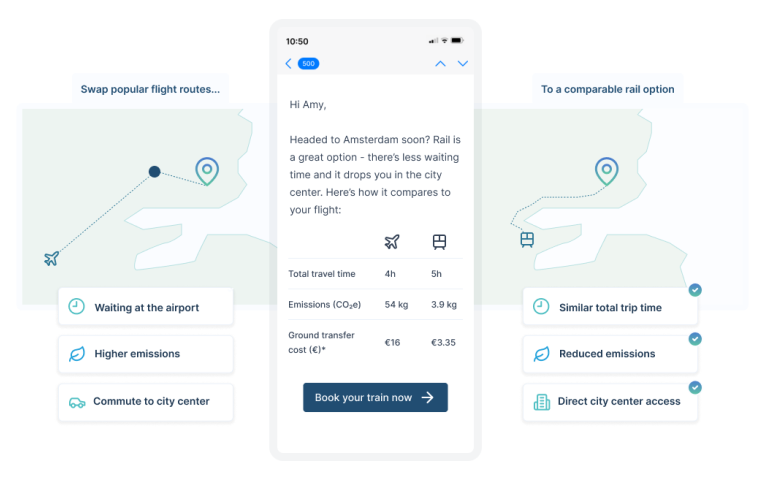
Air-to-Rail savings: London to Amsterdam
~96% emissions reduction
Flight emissions: 0.047 tCO2e
Rail emissions: 0.002 tCO2e
Minimal journey time difference
Rail journey time: 5h 53min
Typical flight time: 4h 40min
Accounts for hidden airport transit times
This comparison considers airport queues, customs and getting into the city center.
Rail is available but travellers still choose to fly
The majority of corporate travel policies mandate rail for journeys under four hours. High-speed rail is expanding across EMEA, Asia and the US. Yet short-haul flights continue to be the default on these. Air-to-Rail interventions change that.
EngageAI predicts upcoming travel decisions and delivers time savings and comfort benefits directly to travellers. The result? Higher policy compliance, earlier bookings, and measurable carbon reduction.
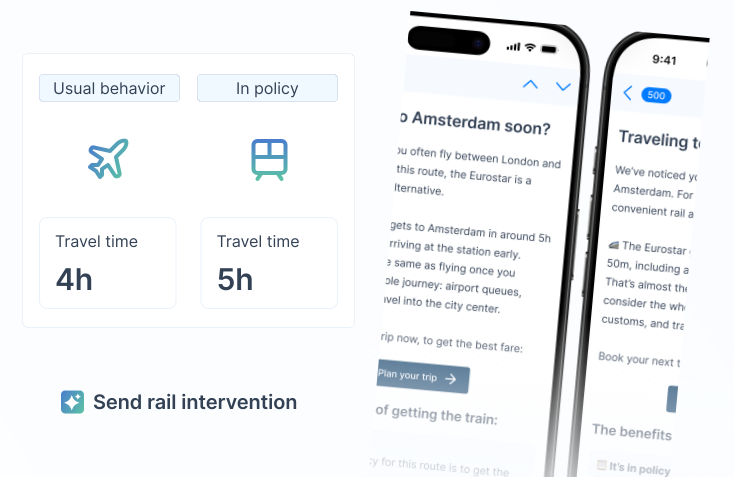
How Air-to-Rail Interventions work
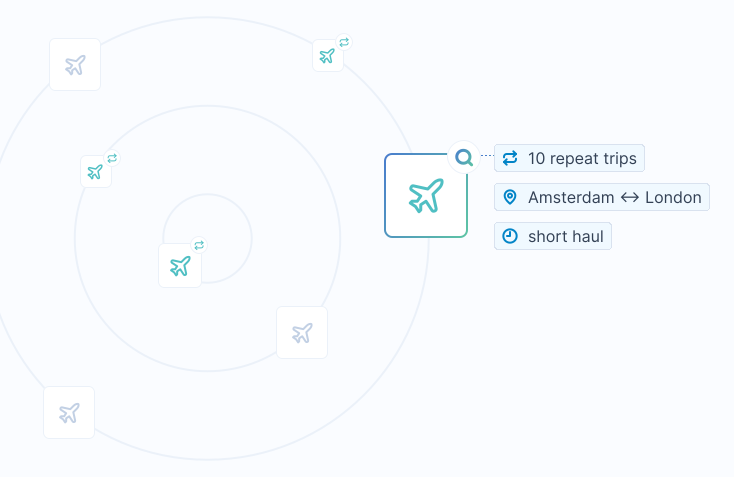
1. Identify travellers and rail-eligible routes
EngageAI applies your corporate rail policy thresholds to determine which routes qualify. It then analyses historic booking behaviour to identify travellers who repeatedly book flights on those routes.
2. Deliver a timely, personalised nudge
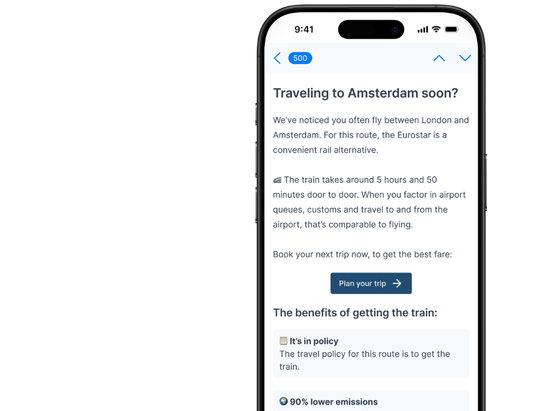
EngageAI can predicts likely trips and intervenes pre-booking, guiding the traveller to opt for rail over air travel. Working closely with our partners, we help surface rail as a viable alternative at point of booking.
3. Observe, learn and reinforce
After intervening, EngageAI analyses the success of the nudge, and whether to nudge further. It continuously learns which travellers are responsive, avoiding unnecessary messaging.
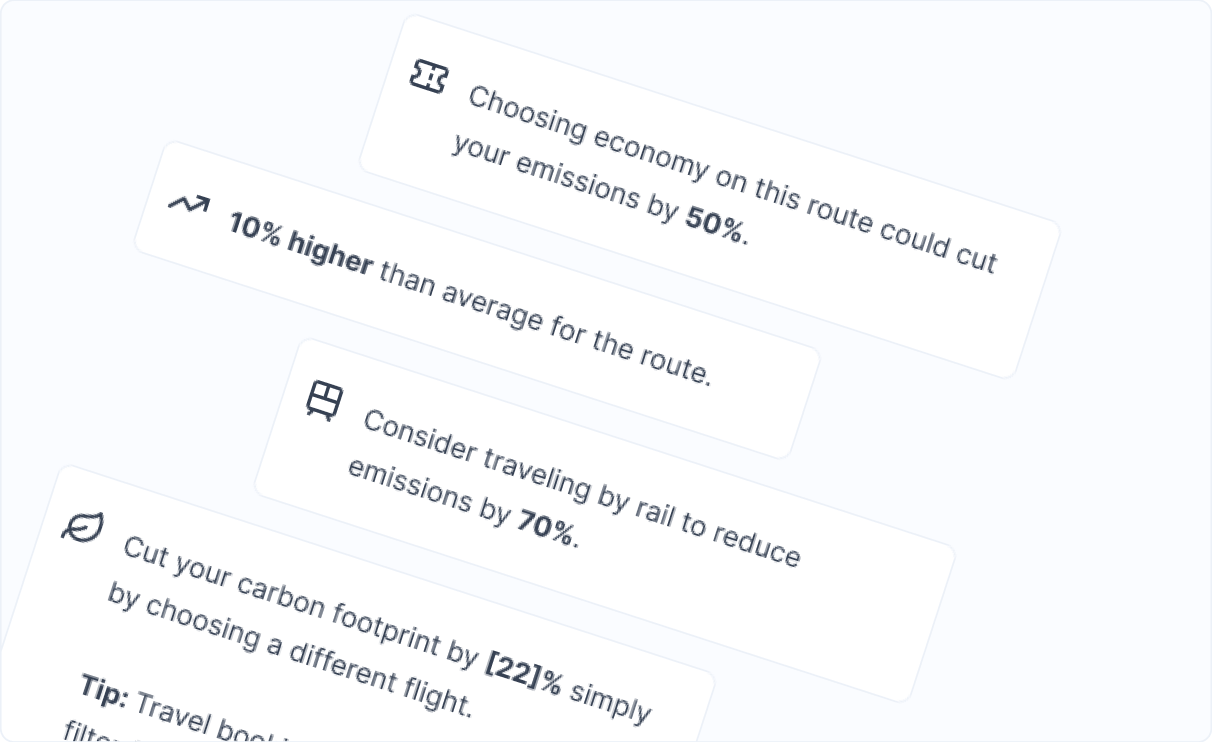
Explore more interventions
Air-to-Rail is one of several interventions within EngageAI. Other examples include booking lead-time optimisation and ground transport swaps.
Frequently Asked Questions
How do you decide which routes qualify for rail nudging?
Rail is surfaced only where defined eligibility criteria are met, including whether your existing travel policy supports rail for that journey time (e.g. under four hours).
If a route does not meet these criteria, no intervention is triggered.
What if rail is slower on a specific route?
Rail is not surfaced unless the time impact remains commercially acceptable and consistent with policy thresholds. The goal is to shift behaviour where practical, not to compromise traveller productivity.
What happens if a traveller ignores the rail suggestion?
EngageAI monitors booking outcomes and adjusts future interventions accordingly. Travellers who repeatedly ignore rail prompts on a route will not continue to receive the same message.
Can we pilot this before rolling it out programme-wide?
Yes. Air-to-Rail interventions can be deployed on selected high-frequency routes or within specific regions to measure rail adoption and emissions impact before expanding programme-wide.
Isn't rail more expensive than flying?
Rail pricing varies by route and booking window. On many under-four-hour routes, rail is cost-competitive with air when booked in advance.
Ready to activate rail on your highest-impact routes?
Let's chat about how Air-to-Rail Interventions bring your policy to life.
Related Products & Articles


AI Safety & Ethics in Sustainability
AI in sustainability only works if it can be trusted. EngageAI is designed to avoid common AI risks – grounding every insight in verified carbon data, never training on client travel data, and using transparent behavioural nudges that benefit travellers, companies, and the climate alike.
Read
How emissions labels impact traveller booking behaviour – and how cost plays its part
Research from the UK Department for Transport shows that high-impact visual carbon labels can increase sustainable flight choices by up to 75%. But how effective are they when price and convenience remain the primary concerns for most travellers and travel programmes?
Read