
EngageAI feature
Pre-Trip Briefings
Bring your travel policy to life
EngageAI layers your travel policy and live city information into one short briefing, built for exactly where the traveller is headed.
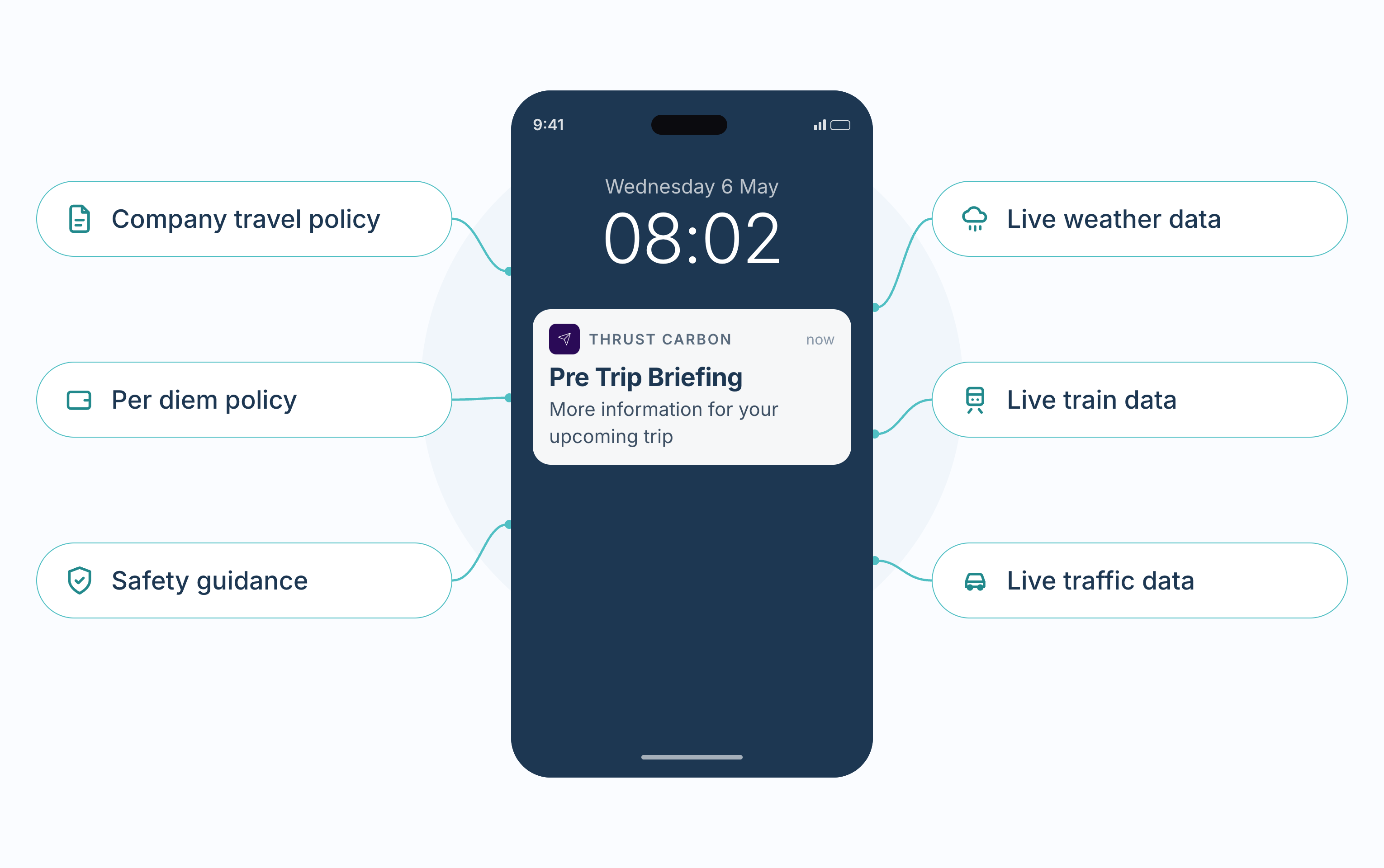
Business travellers don't read company policies
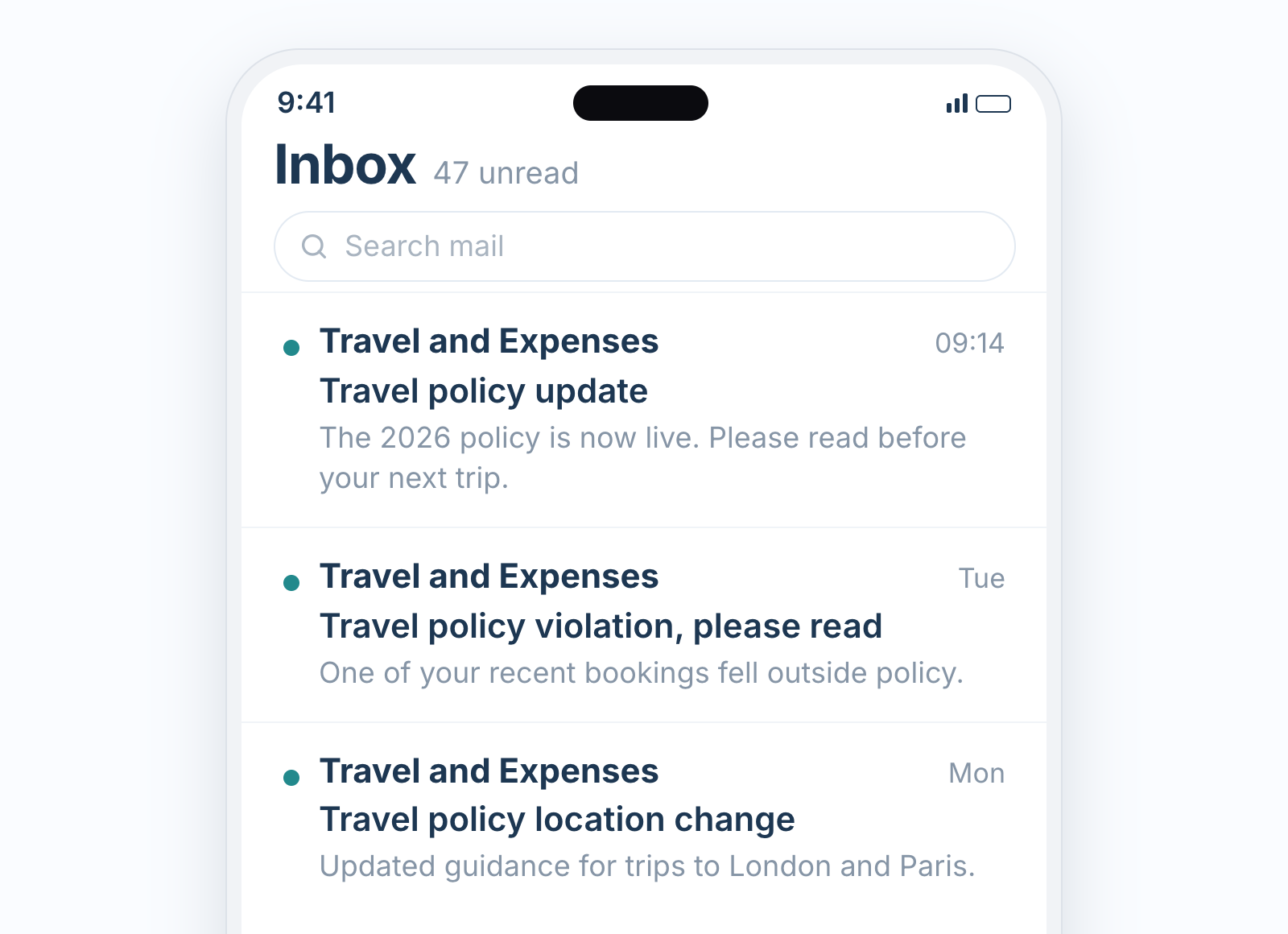
Business travel has a persistent problem: policies exist, but travellers don't read them. Most travel decisions are made quickly, out of habit and out of policy. That drives up cost, emissions, and expense admin. Stricter rules and travel freezes only dampen morale without changing the behaviour.
Pre-Trip Briefings take a different approach. We reach the traveller 24 to 48 hours before they go, with guidance built for exactly where they're headed.
How Pre-Trip Briefings work
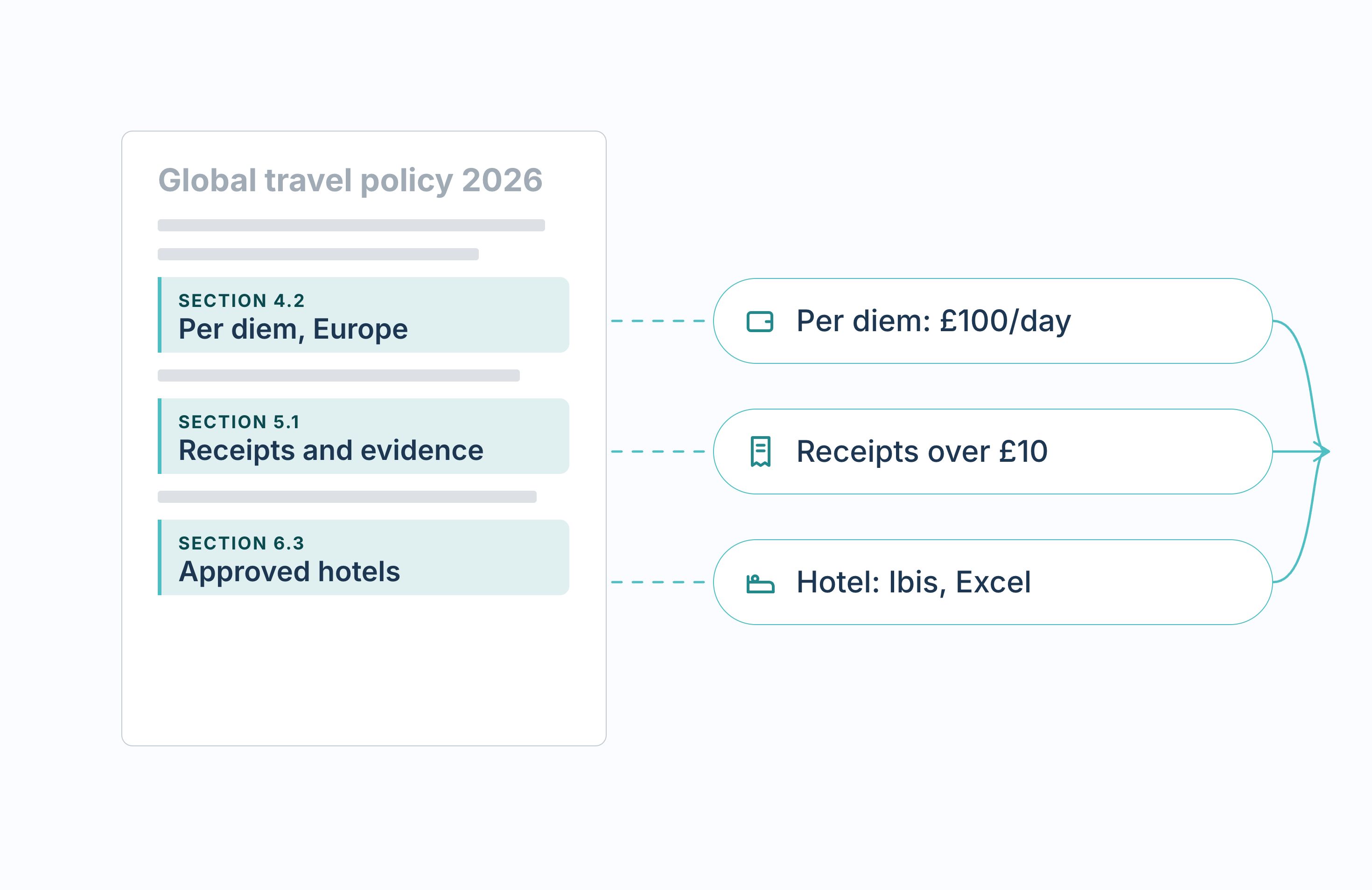
1. Policy made specific
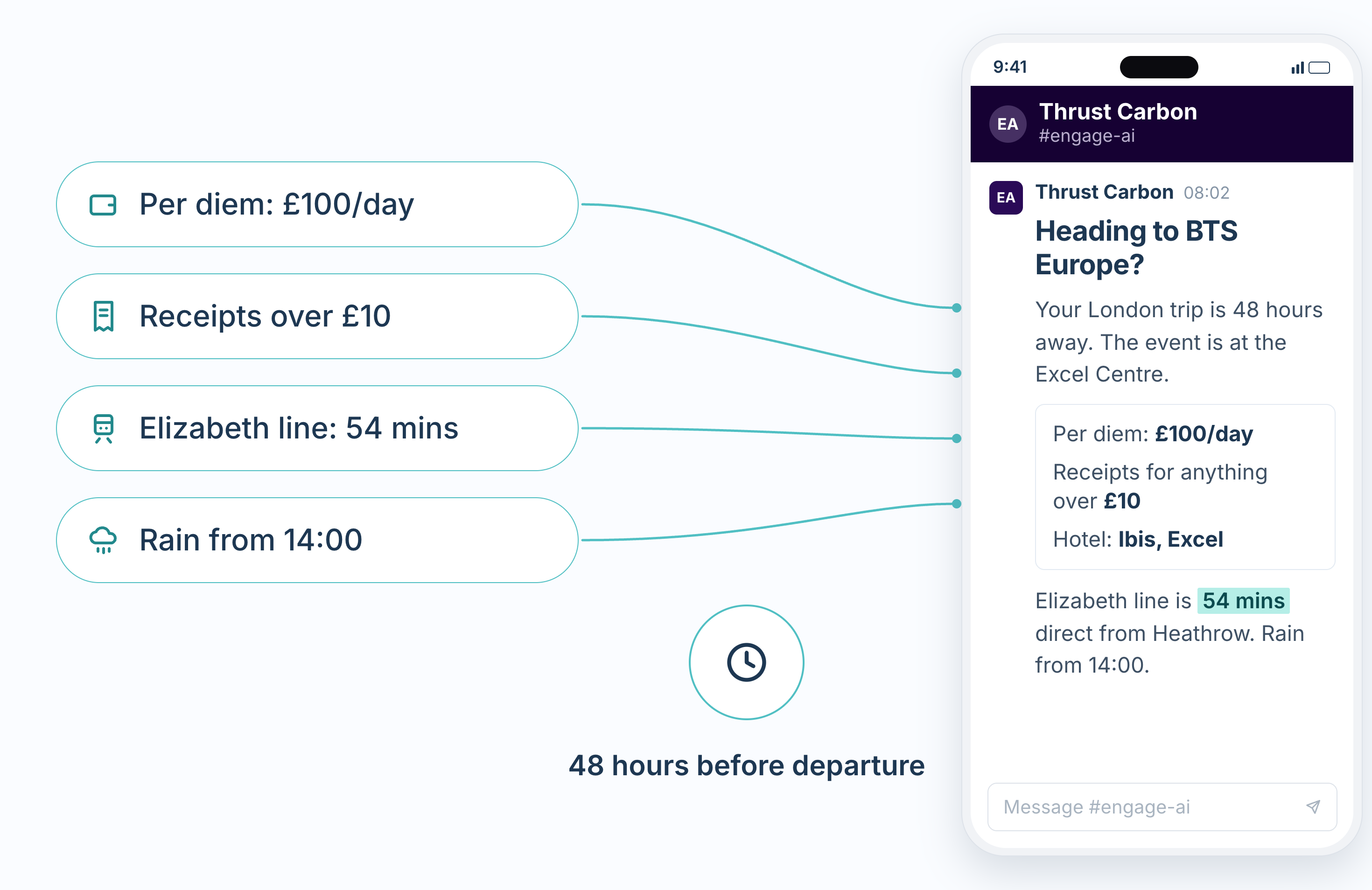
EngageAI reads your travel policy and surfaces what applies to this trip: per diems, expensing, and booking guidance.
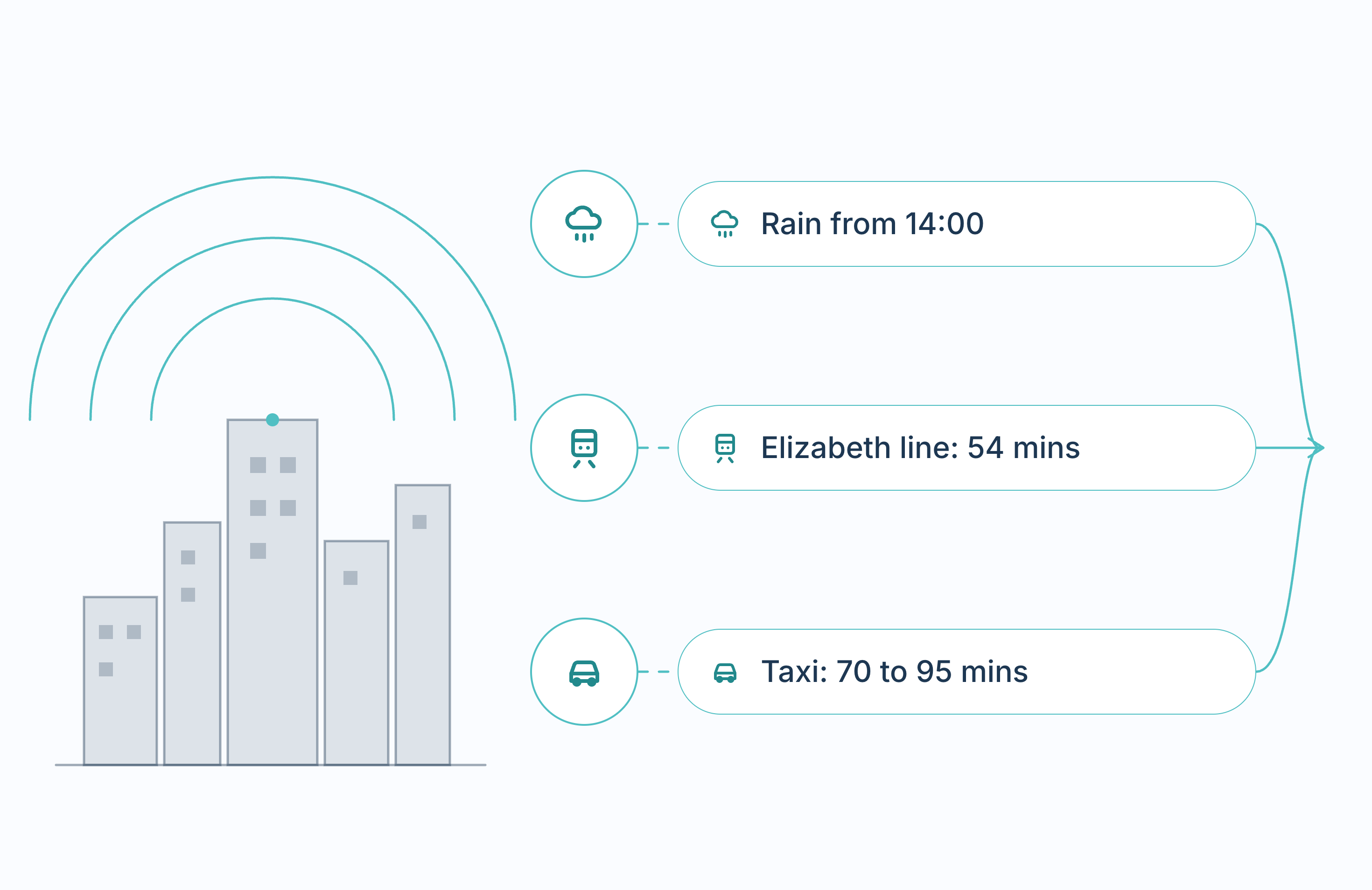
2. Live city guidance
It adds live information for the destination city: safety notices, rail status, traffic, and weather, that is reinforced on landing.
3. Sent at the right time
The briefing lands 48 hours before departure, in whichever channel the traveller already uses (such as Teams or Whatsapp).
Explore more interventions
Pre-Trip Briefings are one of several interventions within EngageAI. Other examples include air-to-rail switching, booking lead-time optimisation, and ground transport swaps.
Frequently Asked Questions
What goes into a Pre Trip Briefing?
Two layers today. First, what your travel policy says about this specific trip: per diems, expensing, and booking guidance. Second, live information for the destination city, such as safety notices, rail status, traffic, and weather.
Do we need to rewrite our travel policy?
No. EngageAI reads your existing policy and surfaces what already applies to the trip in front of the traveller. There's no new policy to maintain, and no change to your booking flow.
When does the traveller receive it?
24 to 48 hours before travel, while there's still time to act on it. It arrives in whichever channel they already use: email, Microsoft Teams, Slack, WhatsApp, or SMS. Both of these are fully customisable to your travel programme requirements.
Can we pilot this before rolling it out programme-wide?
Yes. You can start with a single region, business unit, or set of destinations, then measure engagement and policy compliance before expanding programme-wide.
Isn't this just another email travellers will ignore?
Briefings are short, specific to one trip and one city, and only sent when there's something worth saying. EngageAI watches how travellers respond and adjusts. Messages that consistently go unread stop being sent.
Ready to bring your travel policy to life?
Let's chat about what a Pre-Trip Briefing would say to your travellers.
Related Products & Articles


AI Safety & Ethics in Sustainability
AI in sustainability only works if it can be trusted. EngageAI is designed to avoid common AI risks – grounding every insight in verified carbon data, never training on client travel data, and using transparent behavioural nudges that benefit travellers, companies, and the climate alike.
Read
How emissions labels impact traveller booking behaviour – and how cost plays its part
Research from the UK Department for Transport shows that high-impact visual carbon labels can increase sustainable flight choices by up to 75%. But how effective are they when price and convenience remain the primary concerns for most travellers and travel programmes?
Read